Solid State: Your EV Battery Might Be Obsolete Soon
The Future of Electric Vehicles: Solid-State Batteries and the Road Ahead
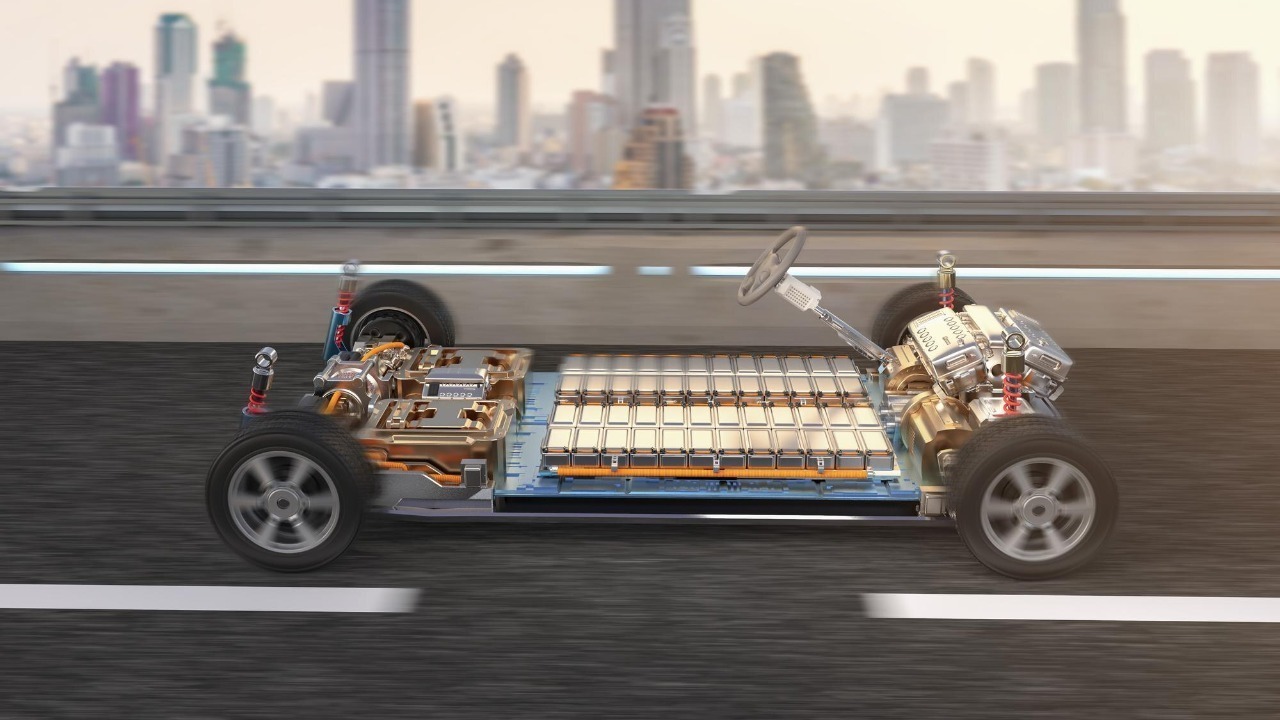
The lithium-ion battery pack that powers millions of electric vehicles (EVs) on the road today may soon face a new challenge—not one related to chemistry, but rather to competition. As federal funding, corporate prototypes, and university research converge on solid-state battery technology, a design that replaces the liquid electrolyte in conventional cells with a solid material, the landscape for EVs is shifting. If solid-state batteries deliver on their promises of faster charging, longer life, and higher energy density, the resale value and market dynamics of current EVs could change significantly.
Federal Investment in Next-Generation Battery Research
One of the clearest indicators that solid-state technology has moved beyond laboratory curiosity is the substantial financial backing it is receiving from the U.S. government. The Department of Energy has allocated approximately $125 million toward research on next-generation batteries and energy storage, signaling a strong federal commitment to chemistries that go beyond today’s lithium-ion standard. This funding supports initiatives like the Energy Storage Research Alliance, led by Argonne National Laboratory, which brings together national labs, universities, and industry experts to advance battery technology.
This program is part of a broader federal research ecosystem that includes advanced projects work and tools such as the Infrastructure Exchange, which helps track and direct federal investments in energy-related projects. Together, these efforts form a pipeline that can move promising battery concepts from basic science through pilot-scale demonstrations and into commercial deployment.
The scale of this investment is significant because it reflects a long-term strategy, not just a passing interest. The $125 million is intended for multi-year research hubs with specific goals to push new battery designs toward commercial viability. For EV owners, this means the technology that could potentially outperform their current battery packs is no longer a distant concept—it's an active, well-funded research program with institutional support and clear milestones.
Corporate Progress: QuantumScape’s Prototype and Manufacturing Challenges
On the corporate front, QuantumScape has emerged as one of the most prominent players in the race to commercialize solid-state batteries. In its Q3 fiscal 2024 shareholder letter, the company outlined performance targets for its QSE-5 cell, including energy density and rapid charging capabilities. However, it emphasized that the design was still in the sample stage, meaning it had not yet reached production levels.
By Q4 fiscal 2024, QuantumScape was discussing progress toward a licensable manufacturing platform and outlining a commercialization pathway for its technology. The company framed its goal less as being the sole producer of solid-state batteries and more as providing a process that other manufacturers could adopt. While a working prototype shows feasibility, a licensable platform suggests a scalable way to build those cells.
However, corporate filings are not the same as actual products on the market. QuantumScape’s own disclosures confirm that the QSE-5 remains pre-production. The step from a promising prototype to a validated, automotive-grade battery pack has historically been where solid-state timelines have slipped. Scaling up involves solving not only scientific problems but also yield, cost, and supply-chain challenges. Investors and EV buyers should interpret these filings as evidence of direction and intent, not as proof that mass-market solid-state EVs are imminent.
Dendrites: The Persistent Challenge in Solid-State Batteries
Despite the promise of solid-state batteries, there are still significant engineering hurdles to overcome. One of the most dangerous issues is dendrite formation—tiny, needle-like lithium structures that grow inside a battery during charging. If they extend from one electrode to another, they can cause a short circuit, leading to sudden failure or even thermal runaway.
Recent peer-reviewed research published in Nature Materials examined how dendrites form in solid-state systems, focusing on two mechanisms: lithium plating and electrolyte reduction. Using advanced facilities supported by the Department of Energy, researchers observed how lithium metal interacts with solid electrolytes at the microscopic level. Their findings show that even rigid solid materials can deform and fracture under cycling, creating pathways for dendrites to propagate.
Access to this research is available through platforms like the Springer Nature portal. Beyond the access details, the underlying message is clear: dendrite formation is not a simple manufacturing defect that can be fixed with better quality control. It is a fundamental electrochemical behavior at the interface between lithium metal and solid electrolyte, requiring solutions at the materials and design level.
Most public discussion around solid-state batteries focuses on the potential benefits—more range, faster charging, lighter packs. However, the dendrite problem is the reason these benefits remain largely in the lab. Until researchers can suppress or eliminate dendrite growth at scale and do so reliably over thousands of charge cycles, solid-state cells will remain too risky and expensive for mass-market vehicles.
Imaging Breakthroughs Offer New Insights
Solving the dendrite problem requires a clear view of what is happening inside a battery. That is where recent university research has made a significant contribution. At UC Riverside, researchers have developed advanced imaging techniques to observe what happens inside solid-state cells as they charge and discharge. Materials scientist Mihri Ozkan described these tools as “an MRI for batteries” in a university release highlighting the group’s work.
This analogy captures what has been missing from solid-state development: real-time observation of the internal processes. Engineers have known about dendrites for years, but they have struggled to watch the process unfold in real time within a functioning cell. Traditional post-mortem analysis can show where dendrites ended up, but not how or when they started. Real-time imaging, however, can reveal how changes in current, temperature, or electrolyte composition affect dendrite behavior.
Better imaging does not solve the problem on its own, but it enables a faster and more rigorous feedback loop. Researchers can test new electrolyte formulations, protective coatings, or interface designs and immediately see whether they delay or prevent dendrite growth under realistic conditions. That kind of rapid iteration is essential if solid-state technology is to move from promising prototypes to robust commercial products.
What This Means for Current EV Owners
The convergence of federal funding, corporate prototyping, and academic research creates a clear trajectory: solid-state batteries are moving toward commercialization, even if the exact timing remains uncertain. For current EV owners, the implications fall into three broad categories: resale value, upgrade options, and charging expectations.
On resale, the risk is not that today’s lithium-ion EVs will suddenly become obsolete, but that a new generation of vehicles with longer range and faster charging could compress used values sooner than expected. If solid-state packs deliver significantly higher energy density, a compact car of the future could match or exceed the range of today’s larger battery SUVs while charging more quickly. That kind of leap would reset consumer expectations in the same way that long-range lithium-ion models reshaped the market for early short-range EVs.
Upgrade options are less straightforward. Most existing EVs are not designed for a simple swap from liquid to solid-state packs. Differences in form factor, cooling requirements, and battery management software make drop-in replacements unlikely in the near term. Instead, solid-state technology is more likely to appear first in new, purpose-built models, possibly at higher price points or in premium trims before filtering down to mass-market vehicles.
Charging expectations may be the most immediate area where solid-state progress influences behavior. As headlines tout faster-charging prototypes and government programs emphasize next-generation infrastructure, owners of current EVs may feel that their vehicles are falling behind. In practice, today’s lithium-ion packs will continue to benefit from expanding fast-charging networks and incremental improvements in software and thermal management. For most drivers, those gains will matter more over the next several years than the eventual arrival of solid-state options.
The bottom line for current EV owners is to view solid-state advances as part of a long-term evolution rather than an overnight disruption. Federal investments and corporate roadmaps suggest that better batteries are coming, but the timeline is measured in years, not months. In the meantime, the vehicles on the road today remain the test bed, proving that electric transportation can work at scale and creating the market that next-generation batteries will eventually serve.
Post a Comment for "Solid State: Your EV Battery Might Be Obsolete Soon"
Please Leave a wise comment, Thank you