Micron's Stagnant Stock: Could Earnings Turn the Tide?
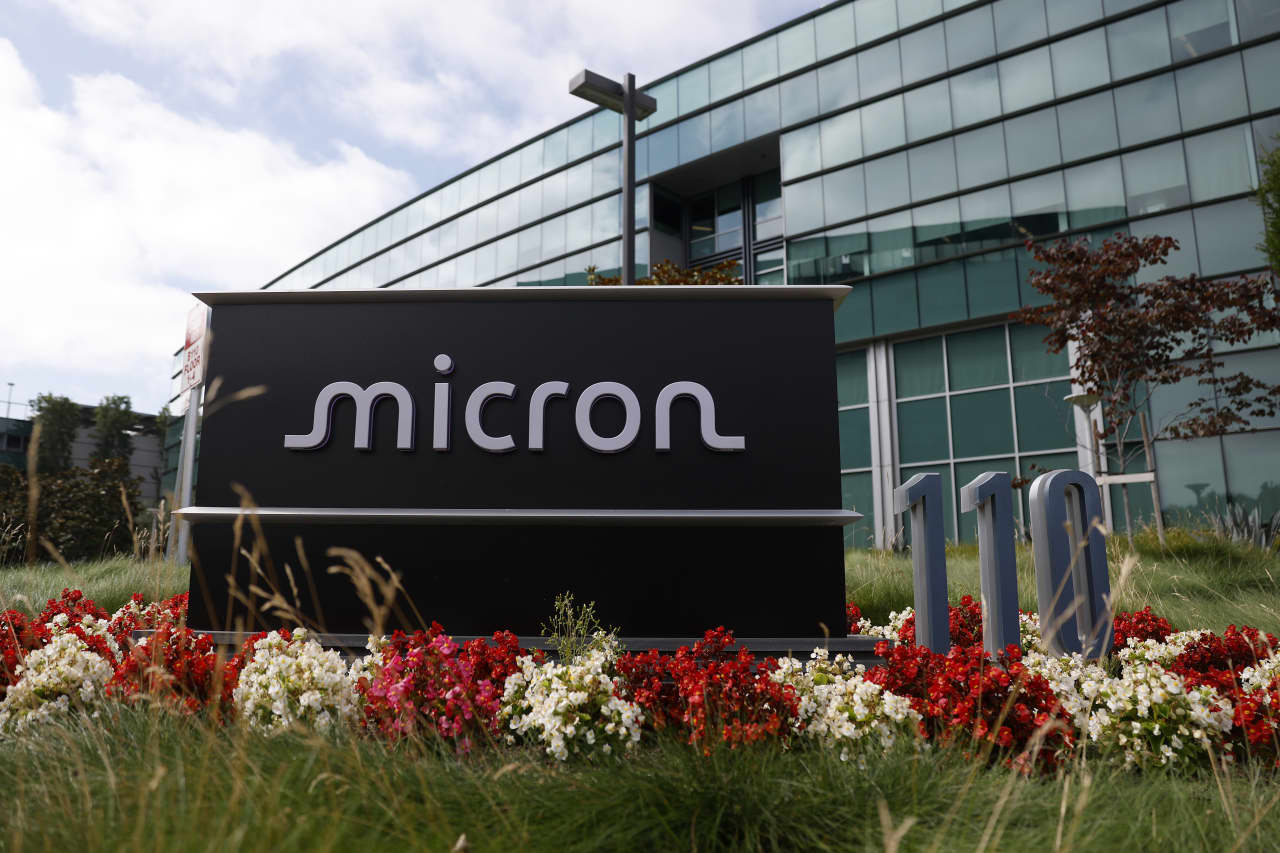
Micron Technology Stock Rises Amid Mixed Outlook
Micron Technology's stock experienced a modest rise on Monday as investors evaluated a mix of positive and negative developments ahead of the company’s earnings report scheduled for March 18. The market reaction highlights the uncertainty surrounding the future of memory demand, especially in light of the growing influence of artificial intelligence (AI).
Positive Signals from Analysts
One of the bright spots for Micron was the renewed confidence from two major Wall Street firms. Analysts at these institutions maintained Buy-equivalent ratings for the stock and raised their price targets, citing an ongoing upward trend in memory demand. This optimism is rooted in the belief that the current cycle of demand growth will continue to benefit memory suppliers.
However, not all news was favorable. Reports suggest that two of Micron’s competitors, SK Hynix and Samsung Electronics, are leading in securing new contracts with Nvidia. This development could pose a challenge for Micron as it competes for high-bandwidth memory (HBM4) supply for advanced AI processors.
Micron’s shares rose by 2.2% to $378.57 during afternoon trading. Despite this gain, the stock has faced some volatility, dropping 6.7% on Friday and 0.9% the previous day. It remains down 14% from its all-time closing high of $437.80, recorded on February 2.
AI Demand and Future Projections
The primary concern among investors is how long the current memory demand boom will last, particularly in the context of AI growth. While there is no definitive answer, the current demand and price trends have prompted Citi to maintain its Buy rating on Micron and increase its price target to $430 from $385.
Looking back at past demand cycles since the 1990s, Micron’s stock has typically peaked two to four months before DRAM prices. Citi analysts expect a significant 171% increase in DRAM prices by 2026 due to strong data-center demand, as indicated by hyperscalers’ capital-expenditure forecasts.
Atif Malik, a Citi analyst, noted in a recent research report: “Our supply chain discussions and analysis point to the majority of the 2026 hyperscale capex revision to be driven by higher memory costs.”
Supply and Demand Dynamics
Susquehanna analyst Mehdi Hosseini predicts that supply and demand may begin to balance out by mid-2027 as more memory clean-room facilities come online. However, he also suggests that more intensive AI workloads could drive continued memory demand, even as margins start to narrow.
In response to these dynamics, Susquehanna has reiterated a Positive rating on Micron stock and increased its price target to $525 from $345.
Competing in the HBM4 Market
Another critical question for investors is whether Micron can successfully compete with Korean rivals SK Hynix and Samsung in supplying HBM4 for advanced AI processors. According to reports from Korean media, Nvidia has selected these two companies as the sole suppliers of HBM4 for its new Vera Rubin accelerator.
Barron’s has reached out to SK Hynix, Samsung, and Nvidia for confirmation of these reports.
Despite the potential challenges, independent analyst Richard Windsor believes that Micron may still find a way into the market. He suggests that the company could be brought on board later in the year when shipments scale up. Additionally, he notes that Micron is unlikely to suffer revenue losses, as the market is fully booked for 2026.
Other Players in the Memory Sector
While Micron faces competition, other players in the memory sector are performing well. Sandisk, which specializes in enterprise flash-storage drives, was the top performer in the S&P 500 on Monday, rising 6.7% to $562.45. Shares have declined 19% from their all-time high of $695.51, recorded on February 3.
Susquehanna has reiterated a Positive rating on Sandisk stock and set a price target of $1000. However, this estimate factors in the eventual end of the memory demand cycle.
Hosseini wrote in a note: “Our valuation multiples have contracted based on our assumption that earnings will peak by mid-2027, followed by a period of decline as memory supply and demand return to balance.”
Post a Comment for "Micron's Stagnant Stock: Could Earnings Turn the Tide?"
Please Leave a wise comment, Thank you