Qualcomm's Speediest Snapdragon PC Chip Outperforms Intel's Top Model
Early Benchmarks Suggest Snapdragon X2 Elite Could Outperform Intel
Traditionally, Windows laptops have been powered by x86 processors from Intel and AMD. However, in recent years, Qualcomm’s Snapdragon chips have begun to make a significant impact, driven by the industry's pursuit of efficiency improvements seen in Apple’s M series processors. Now, Qualcomm is introducing the Snapdragon X2 Elite as a high-end option for Windows laptops, directly competing with Intel’s Panther Lake lineup. Initial benchmarks indicate that the Snapdragon chip might have an edge over Intel in early testing.
Snapdragon X2 Elite Shows Strong Performance in Geekbench Tests
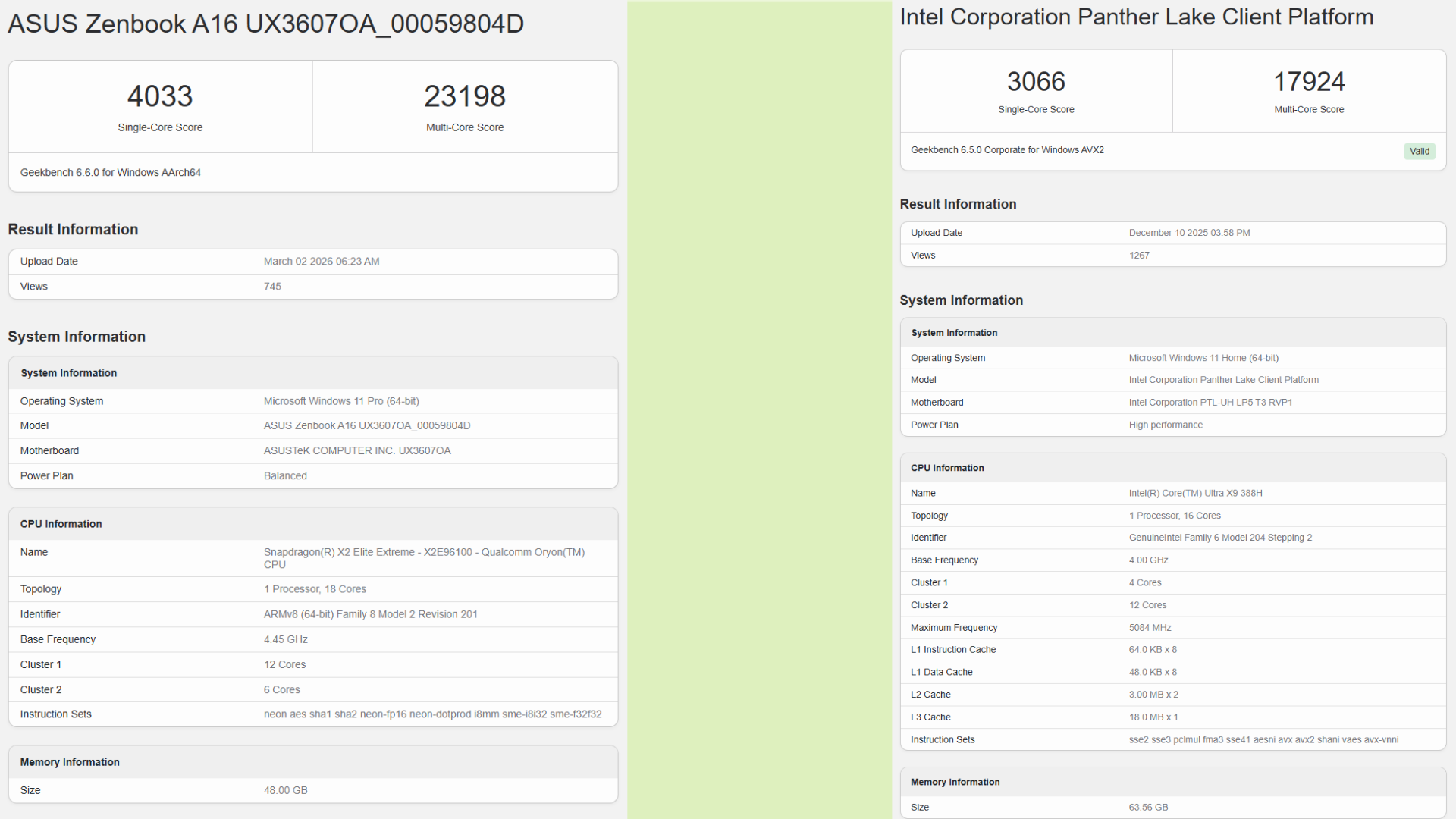
Recent Geekbench 6 scores for the Snapdragon X2 Elite Extreme have been shared online, according to PCGuide. These tests were conducted on an ASUS Zenbook A16 laptop. Geekbench evaluates processors through simulated workloads, producing scores that can be compared across different devices. The results are divided into single-core and multi-core performance metrics.
The Snapdragon X2 Elite Extreme achieved: - Single core: 4,033 - Multi core: 23,198
In comparison, Intel’s Core Ultra X9 388H scored: - Single core: 3,066 - Multi core: 17,924
While benchmark results do not always reflect real-world performance, they offer a glimpse into potential capabilities. The Snapdragon X2 Elite Extreme features an 18-core design, whereas the Intel Core Ultra X9 388H uses 16 cores. In this test, the Snapdragon was operating at approximately 4.45GHz, while the Intel chip ran at around 4.0GHz. However, Intel does claim a maximum boost clock of 5.1GHz on its official website.
Challenges and Progress in ARM on Windows
Despite these promising numbers, there are still challenges with running ARM-based systems on Windows. Not all Windows applications are optimized for ARM architecture yet, although PRISM emulation has improved significantly, and more apps are now natively supporting ARM. One major hurdle remains driver compatibility. Unlike applications, older drivers cannot be emulated, which means some hardware or software may not function correctly without an ARM-compatible driver.
This issue affects certain games that rely on kernel-level anti-cheat systems, such as Riot’s Vanguard used in Valorant. Without native ARM support for these drivers, the game will not run. Users can check if their preferred game or app works on Qualcomm chips using the website Works on Windows on Arm.
However, this concern is becoming less relevant as more apps transition to ARM-native support. In June 2025, it was reported that 100 of the most popular Windows apps are now ARM-native, with users spending over 90% of their time in non-emulated apps. Microsoft later highlighted these figures in September, but some individuals who have never used a Qualcomm-powered PC still believe there are issues for regular users.
The Future of the Chip Race
Qualcomm’s Snapdragon X2 Elite Extreme is already showing early performance numbers that could challenge Intel’s upcoming Panther Lake chips. This development sets the stage for one of the most anticipated CPU battles in recent years. As Qualcomm gains momentum, Intel’s response and the implications of these early benchmarks for real-world laptops remain to be seen.

What do you think? Are you convinced by the early ARM lead, or do you believe Panther Lake will close the gap once final silicon is released?
Join the conversation on Reddit at r/Gadget Daily Hub to share your insights and discuss our latest news, reviews, and more.
Like this article? For more stories like this, follow us on MSN by clicking the +Follow button at the top of this page.
Post a Comment for "Qualcomm's Speediest Snapdragon PC Chip Outperforms Intel's Top Model"
Please Leave a wise comment, Thank you