Marco Rubio Accused of 'Brazen' Censorship via Coercive Threats
The Allegation of Censorship
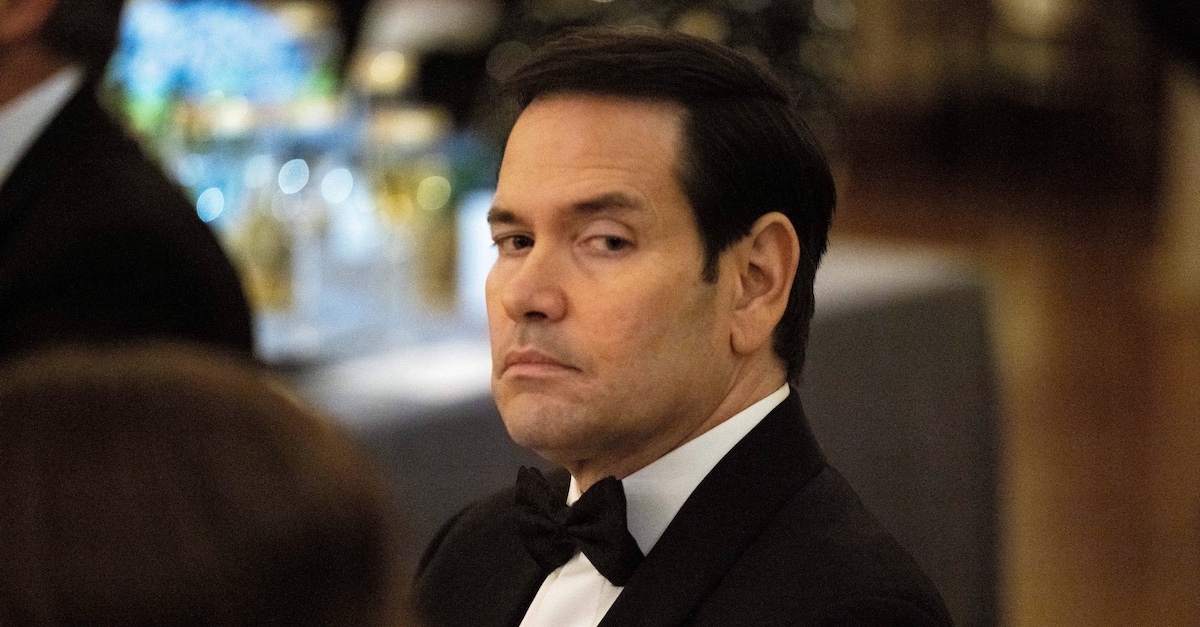
Secretary of State Marco Rubio has found himself at the center of a legal battle, with a lawsuit accusing him of implementing a "brazen" censorship policy against noncitizen researchers, academics, and journalists. The lawsuit claims that this policy is disguised as an effort to combat those "complicit in censoring Americans." The Coalition for Independent Technology Research (CITR), based in San Francisco, filed the lawsuit on Monday in federal court in California. It was represented by attorneys from the Protect Democracy Project and the Knight First Amendment Institute at Columbia University.
The lawsuit seeks a declaration that Rubio's alleged "Censorship Policy," which includes threats of "visa denial, visa revocation, detention, and deportation" for speech supporting content moderation, violates the First and Fifth Amendments of the Constitution. Additionally, it argues that the policy must be blocked from continuing to make such threats against CITR members who fear they may be next if they continue their research and advocacy focused on major internet platforms.
The Background of the Lawsuit
According to the complaint, the situation escalated in December 2025 when Rubio stated he was prepared to "exclude or deport five specific individuals pursuant to the Policy—including the leaders of two organizations that are members of CITR." The lawsuit asserts that the Censorship Policy has already chilled the expressive and associational activities of those targeted, including noncitizen members of CITR.
CITR is a non-profit organization whose members include research institutions, academics, journalists, and advocates who study and report on the impacts of technology on society, including issues related to misinformation, disinformation, content moderation, and trust and safety. The defendants have already targeted CITR's membership under the Policy.
Rubio's Defense and Statements
In late May, Rubio made statements emphasizing the importance of free speech, stating that it makes America a "beacon" around the world. He also mentioned that he would not allow "foreign officials who are responsible for censorship of protected expression in the United States" to do so without consequence.
Rubio addressed content moderation, saying it is similarly unacceptable for foreign officials to demand that American tech platforms adopt global content moderation policies or engage in censorship activity that reaches beyond their authority and into the United States. He emphasized that the U.S. will not tolerate encroachments upon American sovereignty, especially when such actions undermine the fundamental right to free speech.
He explained that the visa restriction policy is based on Section 212(a)(3)(C) of the Immigration and Nationality Act, which allows the Secretary of State to render inadmissible any alien whose entry into the U.S. would have potentially serious adverse foreign policy consequences. He added that certain family members may also be covered by these restrictions.
The Legal Argument Against the Policy
The lawsuit argues that Rubio's claimed prerogative to limit the First Amendment is "unconstitutionally vague" and "even incoherent." It suggests that his use of coercive threats ignores relevant McCarthyism history. The filing states that the legislative history of the foreign policy provisions confirms Congress's intent to restrict the Executive's authority to exclude noncitizens from the country based on their speech, beliefs, or associations.
As noted in a Senate Committee report, Congress adopted the foreign policy provisions to replace McCarthy Era provisions of the INA and, in doing so, "to take away the executive branch's authority to deny visas to foreigners solely because of the foreigner's political beliefs or because of his anticipated speech in the United States."
Reactions and Concerns
CITR executive director Brandi Geurkink expressed concerns about the impact of the policy on researchers. She stated that researchers who help everyday people understand the impacts of Big Tech are scared that they and their families will be targeted for detention and deportation under this policy. At a time when AI is rapidly changing lives and economies, and people are already worried about their freedom and safety online, she emphasized the need for independent researchers more than ever.
"This policy is meant to censor researchers into silence and keep the public in the dark, and that's exactly what it's doing," Geurkink said.
Post a Comment for "Marco Rubio Accused of 'Brazen' Censorship via Coercive Threats"
Please Leave a wise comment, Thank you