Have Turbos and Hybrids Bridged the Gap Between Small and Big Block V8s?
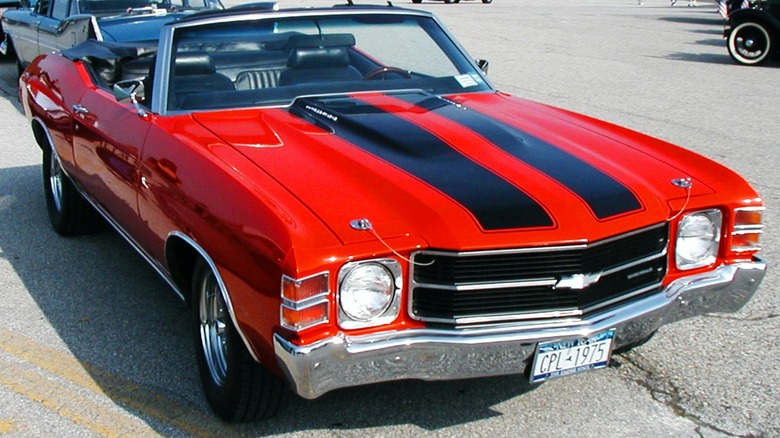
For many years, the rule of thumb for achieving more power from a V8 engine was to simply make it bigger. This was a straightforward equation: the larger the engine's displacement, the more horsepower it could potentially produce. This trend was especially noticeable in the 1960s and '70s when automakers often provided both big block and small block V8 engine options. For example, the 1971 Chevrolet Chevelle came with six different V8 engine choices. These included three "Turbo Fire" small blocks, which generated between 200 and 270 horsepower, and three "Turbo Jet" big blocks, rated from 300 to 425 hp.
However, times have changed significantly. Modern engines are now far more efficient, and it's quite common for today's smaller V8s to outperform the big block engines of the past. One key reason for this shift is the integration of turbochargers and hybrid electric motors.
Turbochargers work by forcing more air into the engine, allowing it to generate more power even with smaller cylinders. Some engines feature two turbochargers for an extra boost. Hybrid systems further enhance performance by incorporating one or more electric motors that contribute their own horsepower. The total power output can then be measured as the combined effort of the gas engine and the electric motors.
To truly compare big block and small block engines fairly, it's essential to look at them from the same era. Let's take a look at the V8 engine lineup offered by Plymouth, Dodge, and Chrysler in 1966. Two small block (B Series) V8 options were available, the 361 and 383 cubic inch engines. On the other hand, the big block (RB series) lineup included three options: a 426 and two 440s, one of which had dual exhausts.
Unsurprisingly, the big block engines were the powerhouses. The most horsepower you could expect from the small blocks was 325 hp from the 383. Among the big blocks, the 440s did outperform the 383, reaching 350 and 365 hp. However, the 426 produced 425 hp, which was 100 hp more than the most powerful small block.
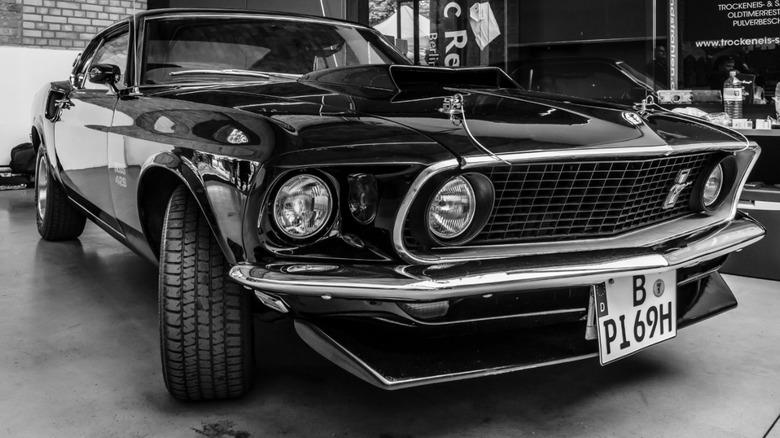
This trend was also evident in other automakers' offerings. For instance, Ford introduced two versions of the Boss Mustang in 1969. The Boss 302 was rated at 290 hp, while the Boss 429 was much more powerful at 375 hp.
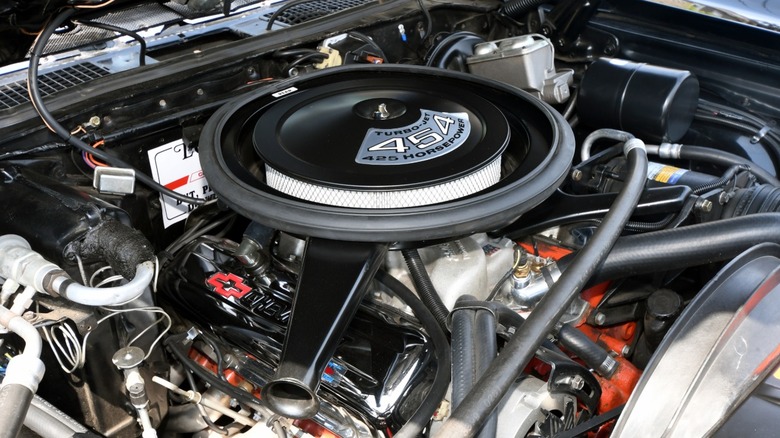
One of the primary advantages of big block engines has always been their power. Larger cylinders and longer strokes mean more displacement, allowing more air and fuel to pass through the engine, resulting in greater power. They don't require turbochargers or any form of forced induction. There's an old saying, "There is no replacement for displacement." While modern turbochargers may challenge this notion, big block engines still offer significant torque due to their design.
However, big block engines come with several disadvantages, which is why they are rarely seen in new cars today. Their weight is a major issue; they are much heavier than small block engines, which affects handling. Additionally, since they consume more fuel, their fuel efficiency isn't great. Their extra weight doesn't help either.
Big block engines are also more expensive to purchase and repair. Parts can be harder to find, and they take up more space, making swaps difficult.
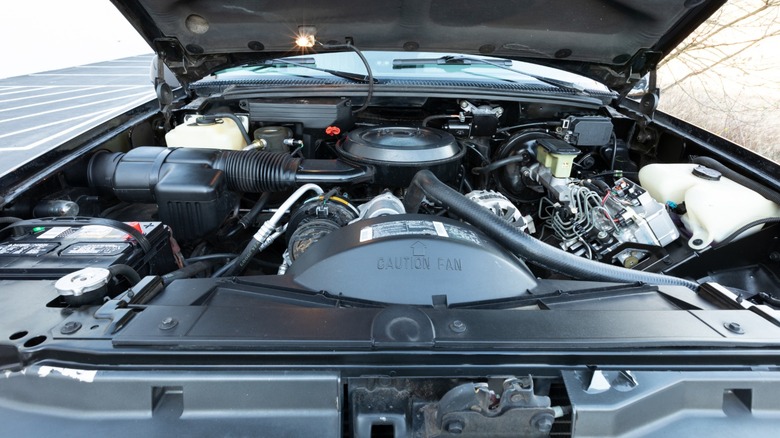
Small block engines, on the other hand, are lighter and offer better balance and quicker acceleration, improving the overall driving experience. Smaller engines also provide better weight distribution and can rev faster. Fuel efficiency is easier to achieve with a lighter car, where engine weight plays a significant role. Small block engines also require less maintenance and can last longer.
They are also more versatile, fitting into a wider range of vehicles, making engine swaps easier. Modifying a small block engine is simpler because of the abundance of aftermarket parts, which are typically more affordable. Small block engines also strike a good balance between power and weight, especially when tuned for higher horsepower.
Despite these benefits, small block engines do have some drawbacks. The main disadvantage is raw power, particularly when comparing naturally aspirated engines without direct fuel injection. In such cases, a small block engine cannot match a big block engine. Still, the advantages of small block engines outweigh their disadvantages, especially for street cars and daily drivers. The small block Chevy Turbo Fire was the most produced engine of all time.
Turbochargers and superchargers both serve the same purpose: forcing more air into the engine to increase power. A turbocharger uses the engine's exhaust to spin its turbine, which powers its compressor, pushing air into the engine. A supercharger, on the other hand, is usually driven by a belt connected to the camshaft rather than the exhaust.
Today, it's not uncommon for small block V8s to produce over 700 hp. For example, the 2022 Ford F-150 Raptor R features a 5.2-liter supercharged V8 that generates 700 hp. The supercharged 6.2-liter Hemi Hellcat engine in the 2015 Dodge Charger SRT Hellcat produces 707 hp. The new $300,000 Ford Mustang GTD has a supercharged 5.2-liter V8 that churns out 815 hp.
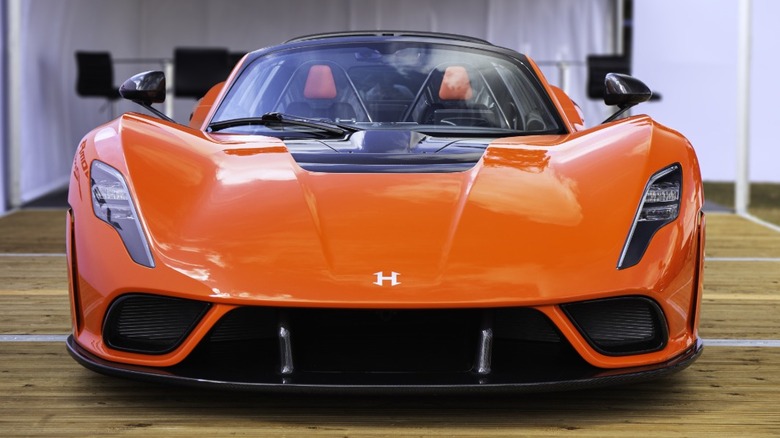
Some modern small blocks can even reach four-digit horsepower ratings. The new Chevy Corvette ZR1 is a game-changer with a twin-turbocharged 5.5-liter flat-plane crank V8 that delivers 1,064 hp. The Koenigsegg Jesko Attack can produce 1,280 hp using gas and an impressive 1,600 hp with E85 biofuel. Most impressively, the Hennessey Venom F5 can pull 1,817 hp from its V8 twin-turbo engine.
Hybrid systems add another layer to the power equation. When combined, the horsepower of the electric motors and the gas engine can rival the big block engines of the past. For example, the 6.2-liter small block V8 in the Chevy Corvette E-Ray produces 495 hp on its own. When combined with the vehicle's 160 hp electric motor, the total reaches 655 hp, though some tests suggest it can go even higher.
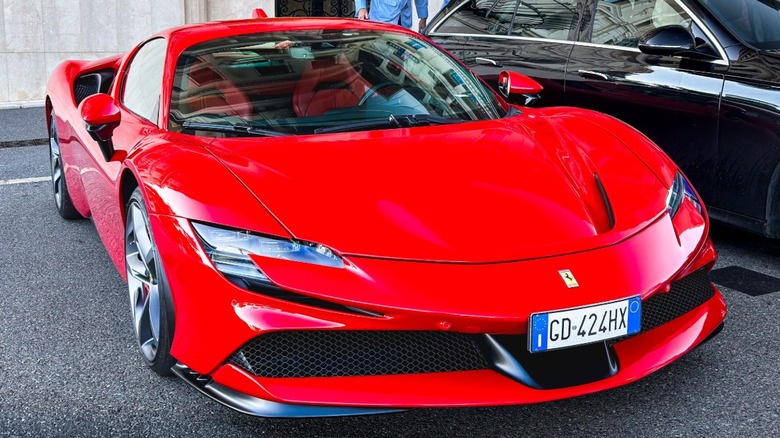
The Ferrari SF90 Stradale, the first plug-in hybrid from Ferrari, features a twin-turbo V8 rated at 769 hp. It also has three electric motors that add a combined 217 hp, bringing the total to 986 hp. These figures are staggering, but what ties them all together is progress. Engines continue to become more efficient, and adding a turbocharger or electric motor to a powerplant allows it to rival or exceed the performance of big block engines from previous decades.
Post a Comment for "Have Turbos and Hybrids Bridged the Gap Between Small and Big Block V8s?"
Please Leave a wise comment, Thank you